

The Smithsonian’s Mother Tongue Film Festival celebrates cultural and linguistic diversity by showcasing films and filmmakers from around the world, highlighting the crucial role languages play in our daily lives.
The eleventh annual festival took place February 19–22, 2026, in various locations across Washington, DC, with 25 films in 27 languages from 14 regions of the world.
Films marked with below are available to stream in full on our website.
Through digital storytelling, the festival amplifies the work of diverse practitioners who explore the power of language to connect the past, present, and future.
We acknowledge with respect the Piscataway people on whose traditional territory the Smithsonian stands and whose relationship with the land west of the Chesapeake Bay continues today.
Join us on the opening night of the eleventh Mother Tongue Film Festival! To kick things off, our feature presentation is Uiksaringitara (Wrong Husband), which follows the lives of star-crossed teenage lovers Kaujak and Sapa in 2000 BCE Igloolik, Nunavut.
Stay afterward for a Q&A with the film’s producer and cowriter, Samuel Cohn-Cousineau, moderated by film program manager Cindy Benitez from the National Museum of the American Indian.
Content advisory: This film contains some scenes of physical violence.
Join us for a retrospective of documentary filmmaker Jorge Prelorán (1933–2009), who was best known for his intimate approach to ethnographic film, a style known as “ethnobiography.” We are delighted to present a screening of Prelorán’s 1970 film Imaginero, an ethnobiography of Hermógenes Cayo, a self-taught woodcarver and painter who lived on the high Andean plateau of Argentina with his wife and children.
The majority of Prelorán’s films were shot in rural areas of Argentina, particularly the Andean highlands and the Pampas (plains), often in communities of mixed Indigenous and Spanish heritage. Prelorán documented a wide range of subjects, including art, folk crafts, agriculture, ranching, markets, religious rituals and festivals, and social and cultural change.
Stay after the film for a discussion about Prelorán’s work and the importance of film archives with anthropologist and filmmaker Alice Apley and Joshua Bell, festival co-director and curator of globalization at the National Museum of Natural History.
These short films feature stories from around the world and across generations. From an eighty-two-year-old South Greenlandic grass-sewing specialist to a young Māori girl in 1826 Aotearoa (New Zealand), this program highlights and celebrates the voices, resilience, and artistry of women and girls.
Stay after the program for a Q&A with award-winning director Herrana Addisu, moderated by film program manager Cindy Benitez from the National Museum of the American Indian.
Content advisory: The film First Horse includes implication of suicide.
In the village of La Raya, a refrigerator mysteriously appears to young friends Sotera and Erick, triggering strange events. Struggling with separation from her mother, Sotera turns to her community for help and uses her entrepreneurial spirit to sell the appliance. The Chatino language and cultural practices ground this film in Oaxacan life, exploring themes of migration and belonging central to director Yolanda Cruz’s work.
Stay after the film for a Q&A with Chatina director Yolanda Cruz, moderated by Amalia Córdova, festival co-director and supervisory museum curator at the Center for Folklife and Cultural Heritage.
Join us for this collection of family-friendly shorts that are guaranteed to entertain and put a smile on your face! Featuring a playful film noir in Gaelic, an experimental short film featuring children from the Costa Chica region of Mexico, and a music video from Smithsonian Folkways artist Meklit, this program offers a range of styles and stories for everyone to enjoy.
Stay after the screenings for a Q&A with director Balam Toscano.
Do we belong to a place, or does a place belong to us? In the Chiapas Highlands of Mexico, the filmmaker immerses herself in a Tsotsil family, revealing a longing to acknowledge different ways of inhabiting the same territory. This intimate portrait captures women’s efforts to preserve local sheep breeds, maintain their connection to the Tsotsil language, and nurture agricultural traditions across generations.
We are pleased to screen our first film in Mỹky, an endangered language spoken in the Mato Grosso state of Brazil and revitalized by younger communities through documentation such as this film. Contacted in 1971, the Mỹky have lived surrounded by non-Indigenous farms in central Brazil. Moving between archival materials from missionary expeditions and interviews with elders, this film offers a Mỹky perspective on life before the invasion and their fight for demarcation of their ancestral land.
Stay after the film for a virtual Q&A with directors Typju Mỹky (Mỹky) and André Tupxi Lopes, moderated by Amalia Córdova, festival co-founder and supervisory museum curator at the Center for Folklife and Cultural Heritage.
This curated selection of short films center the body as a vessel of memory, creativity, and cultural continuity, showcasing the ways performance shapes how we move through the world. Through poetry, traditional dance, and even the rhythms of surfing, these films reveal how embodied knowledge connects us to our communities, our environments, and our histories. Together, they illustrate the power of performance as a lived language of resilience and expression.
Stay after the screening for a discussion with Fijian anthropologist and academic Tarisi Vunidilo, moderated by Halena Kapuni-Reynolds, associate curator of Native Hawaiian history and culture at the National Museum of the American Indian.
In Hokkaido, Japan, Shigeki resists cultural suppression by passing his Ainu ancestral knowledge to his son Motoki and their community. Through demonstrations of marek fishing with spears and traditional woodworking, this film captures intergenerational knowledge transfer and the embodiment of Ainu identity that persists.
Content advisory: This film contains scenes of animal hunting and cleaning.
In the Peruvian Andes, father and son Fernando and Dylan embark on an ambitious mission to translate The Lion King into Quechua, an endangered language spoken in six countries of the Andes. Working alongside talented voice actors, they face numerous challenges as they champion language revitalization and accessible media for Indigenous peoples.
Stay after the film for a Q&A with award-winning filmmaker Augusto Zegarra, moderated by Amalia Córdova, festival co-director and supervisory museum curator at the Center for Folklife and Cultural Heritage.

Most films are open captioned or subtitled in English. Where on-screen captions are unavailable, printed transcripts will be provided.

American Sign Language interpretation will be provided for Q&As and discussions.

All venues are wheelchair accessible.
We strive to maintain an accessible and inclusive environment for all attendees, visiting filmmakers, and staff. For questions about access services, please email folklife@si.edu.
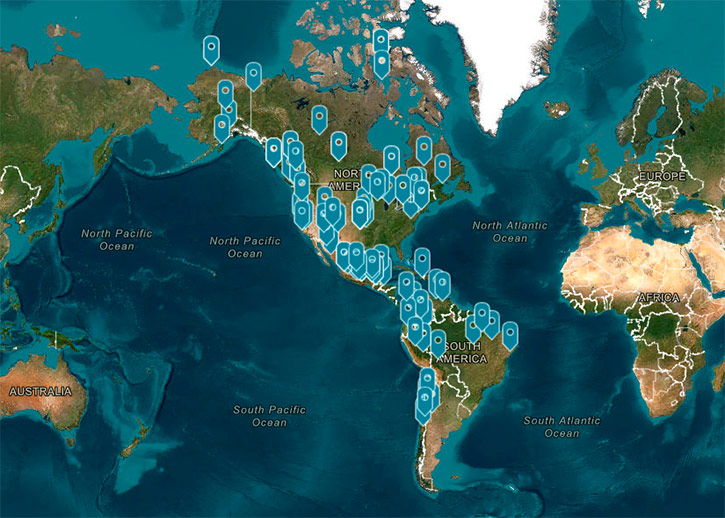
Explore this visual archive of every film shown at past Mother Tongue Film Festivals. Each movie is accompanied by a marker which shows the approximate location of the culture or language represented in the film. For select films, you can watch trailers or full films without leaving the map.
The Mother Tongue Film Festival is a public program of Recovering Voices, a collaboration between Smithsonian’s National Museum of Natural History, National Museum of the American Indian, Center for Folklife and Cultural Heritage, and Asian Pacific American Center. Find related resources through Folklife’s Mother Tongue Media and Language Vitality Initiative.
This program also received support from the Embassy of Mexico in the United States, the Mexican Cultural Institute of Washington DC, George Washington University Department of Anthropology, Georgetown University Department of Anthropology, New York University at Washington DC, Planet Word, Documentary Educational Resources, and The Elizabeth and Whitney MacMillan Endowment, as well as anonymous donors.





We would like to extend a special thank you to Kālewa Correa (APAC), Claudia Foronda (CFCH), and Mary Linn (CFCH) for their creative contributions and dedication to Mother Tongue over many years.
Zacharias Kunuk (Inuk)
Canada
Inuktitut
2025
100 min.
Drama
In 2000 BCE Igloolik, Nunavut, star-crossed teenage lovers Kaujak and Sapa are promised to each other since birth, but their bond is shattered when Kaujak’s father dies and her mother marries a man from a distant camp. The promise of a better future turns into a desperate struggle as Kaujak is besieged by aggressive suitors backed by a powerful, evil shaman. Despite the pressure, Kaujak holds fast to her heart, resisting all attempts to claim her and clinging to the hope that Sapa will return to make good on their childhood pledge.
Jorge Prelorán
Argentina/United States
Spanish, English
1970
53 min.
Documentary
Imaginero is an ethnobiography of Hermógenes Cayo, a self-taught woodcarver and painter who lives on the high Andean plateau of Argentina with his wife and children. The film weaves a portrait of Cayo, the craft of image making, Indigenous Catholicism, and the lifestyle of a solitary Andean family braving the harsh conditions of their surroundings.

Princess Daazhraii Johnson
Alaska
Dinjii Zhuh K’yaa (Gwich’in)
2025
14 min.
Drama
Two elderly women, Sa’ and Ch’idzigyaak, find themselves abandoned by their tribe during a brutally harsh famine. Devastated and scared of what the future holds, Sa’ must convince Ch’idzigyaak that their survival is worth fighting—“if we are going to die, then we should die trying to live.” Princess Daazhraii Johnson’s film is the first adaptation of Velma Wallis’ 1993 novel, told entirely in Gwich’in. This is the second Gwich’in story screened at Mother Tongue, and the first Gwich’in story from Alaska.
Arina Kleist (Inuk)
Kalaallit Nunaat (Greenland)
Greenlandic Inuit, Kalaallisut (Greenlandic)
2024
18 min.
Documentary
This short documentary chronicles the remarkable life of Marie Josefsen, an eighty-two-year-old Indigenous South Greenlandic grass-sewing specialist. Growing up, Marie was surrounded by her mother and aunts, who sewed lyme grass into everyday objects. Her father and uncles collected the grass on hunting islands, transporting it home on their kayaks. Having spent decades practicing and refining her skills in grass sewing, Marie now fears she may be the last to hold this ancestral art.
Awanui Simich-Pene (Māori)
Aotearoa (New Zealand)
Māori
2024
11 min.
Drama
In 1826 Aotearoa (New Zealand), a young Māori girl weaves a toy waka (boat) that she sets afloat in a river. Downriver, she encounters a dying man with his horse, an animal that she has never seen before. Noticing her fascination with the horse, the man offers to trade it to her for the waka.
Herrana Addisu
Ethiopia
Amharic
2024
18 min.
Experimental
The River unfolds in three chapters, exploring femininity through choreographed movement, vibrant dress, and traditional Ethiopian music. The film weaves together intergenerational knowledge transfer as women pass down cultural practices and Amharic wisdom. Drawing from the director’s childhood memories of Kebena, a district in central Ethiopia, the film uses the rhythms of daily life and the symbolism of water to examine identity, community, and the resilience of women across generations.
María Fernanda Galindo
Mexico
Cmiique Iitom (Seri/Comcáac), Spanish
2021
15 min.
Drama
In the Mexican state of Sonora, musician Zara competes in a band contest, dreaming of more than singing at the local church on Sundays. Meanwhile, her close friend Célika struggles in an abusive relationship, a reflection of the widespread femicide and violence against women in Mexico that permeates the film. Through powerful rap verses in the Seri language, Zara calls for recognition of women’s rights and safety.
Yolanda Cruz (Chatina)
Mexico
Chatino, Spanish
2024
80 min.
Drama
In the Mexican village of La Raya, a refrigerator mysteriously appears to young friends Sotera and Erick, triggering strange events. Struggling with separation from her mother, Sotera turns to her community for help and uses her entrepreneurial spirit to sell the appliance. The Chatino language and cultural practices ground this film in Oaxacan life, exploring themes of migration and belonging central to director Yolana Cruz’s work.
Juan Felipe Zuleta
Mexico, Peru
Spanish, Quechua
2025
4 min.
Music Video
“Sígueme” by Xiuhtezcatl featuring Renata Flores is a visual and musical journey that bridges ancestry and the present. Set across vast natural landscapes and urban edges, the video invites viewers to “follow” cultural reconnection and collective awakening. Xiuhtezcatl’s verses call for movement and resistance, while Renata brings ancestral strength and memory in Quechua and Spanish. Together, they merge hip-hop with Indigenous roots, blending rhythm, language, and imagery that celebrate identity, land, and continuity.

Javier Arias-Stella
Peru
Quechua, Spanish
2025
15 min.
Drama
Every day, ten-year-old América treks more than two hours from her isolated village in the Peruvian Andes to go to school. She is upset when told that she could fail the year if she’s late again to school. The dream of riding her own bicycle takes her on an incredible journey that leads to self-discovery, empowerment, and a newfound appreciation for her culture.
Luca Kerr
Scotland
Gaelic
2025
4 min.
Drama
In 1940s Edinburgh, a detective and a mob boss play a game of cards. This playful film noir, spoken entirely in Scottish Gaelic, reimagines the classic crime genre through the lens of Celtic language and culture, blending atmospheric visuals with the rhythms of Gàidhlig dialogue set against the backdrop of Scotland’s historic capital.
Sophiyya Nayar
United States
Amharic
2025
5 min.
Music Video
“Tizita”—meaning memory, nostalgia, or longing in Amharic—is a beloved folk song in Ethiopia. In this version, Ethiopian American artist Meklit gives it a modern spin, accompanied by a jazz ensemble and harpist Brandee Younger. Meklit’s dreamy music video for “Tizita” reflects on the passage of time and follows two flower-headed figures. This song is from her new album, A Piece of Infinity, released in 2025 by Smithsonian Folkways Recordings.
Ximena Guzmán, Balam Toscano
Mexico
Ayuuk
2024
6 min.
Experimental
In the mountains of the Sierra Mixe in Oaxaca, Mexico, Noemí, an Ayuujk woman, reflects on the loss of her language in a voice that is interwoven with the daily life of the community of Cerro Costoche. Children recreate scenes from the community’s daily life in the Ayuuk language, which means “place where the foxes live.”
Irati Dojura Landa Yagarí (Emberá Chamí)
Colombia
Emberá Chamí
2024
13 min.
Drama
Kari is afraid to laugh. One day she meets Kera, a young woman who tells her the legend of Kiraparamia, a woman who, according to the elders, was punished by the gods for laughing at her husband. Kera’s interpretation is that Kiraparamia’s laughter actually set her free, which empowers Kari to use laughter to stand up to the children who bully her and her friends. Akababuru is the first narrative film in Emberá Chamí to be screened at Mother Tongue and reimagines Emberá mythology through the intimate lens of sisterhood and childhood.
Gabriela Domínguez Ruvalcaba
Mexico
Spanish, Tsotsil
2024
79 min.
Documentary
Do we belong to a place, or does a place belong to us? In the Chiapas Highlands of Mexico, a filmmaker immerses herself in a Tsotsil family, revealing a longing to acknowledge different ways of inhabiting the same territory. This intimate portrait captures the women’s efforts to preserve local sheep breeds, maintain their connection to the Tsotsil language, and nurture agricultural traditions across generations.
Typju Mỹky (Mỹky), André Tupxi Lopes
Brazil
Mỹky, Portuguese
2025
39 min.
Documentary
Contacted in 1971, the Mỹky now live completely surrounded by farms in central Brazil. Moving between archival materials from missionary expeditions and interviews with elders, this film offers a Mỹky perspective on life before the invasion and their fight for demarcation of their ancestral land. Mother Tongue is proud to screen its first film in Mỹky, an endangered language spoken in the Mato Grosso state of Brazil and revitalized by the youth through documentation such as this film.
Letila Mitchell
Rotuma (Fiji)
Rotuman, English
2024
23 min.
Experimental Documentary
Steeped in symbolism and no larger than a child’s hand, the diminutive bird known as the Armea is found in only one place on Earth: the Pacific island of Rotuma (Fiji). Armea follows the dancers and musicians of Rako Pasefika as they work with their elders in creating a new performance inspired by the Armea. Both an offering to those who have guided the way and a promise to sustain sacred artforms for generations to come, Armea is an ode to all that is small yet sacred.

Fenton Lutunatabua
Fiji
Na Vosa Vakaviti (Fijian), English
2023
15 min.
Experimental
The recent swells of climate activism in the Pacific are inherently linked with the deep connections of past and future generations. In this four-part cinematic poem, Fijian storyteller Fenton Lutunatabua reflects on the truths he holds as an Indigenous man, using creativity to consider his path forward. Vakaraitaka was realized by a fully Fijian production team, including the dance group Wehi and costumes by the fashion designer Epeli Tuibeqa. Filmed at a diversity of locations in Fiji, from the highlands to the beaches, the land also plays a pivotal character in grounding the work.
Sofía Rodríguez
Rapa Nui (Chile)
Rapa Nui, Spanish
2024
16 min.
Drama
Marahoro is a fifteen-year-old on summer vacation who longs to surf the ocean of Rapa Nui with his friends. However, his father discourages this and keeps him tied to rehearsals with the Mana Ma’ohi Ensemble. The spirited young boy finds strength in an ancient Rapa Nui holler to challenge his father’s harshness, showing him that he can find his own place in the world and honor his culture in his own way. Marahoro received production funding from Pacific Islanders in Communication’s Shorts Fund.
Elyse Butler, Noʻu Revilla
Hawai‘i
Hawaiian, English
2024
3 min.
Experimental
This visual poem by No‘u Revilla conjures the Hawaiian concept nānā i ke kumu, which implores us to look at our bodies and the bodies of our lands and waters as the source of where we come from. Nānā i ke kumu was commissioned by the Shangri La Center for Islamic Art, Culture & Design in 2024 for their fourth installment of 8x8, which brought together eight visual artists and eight performing artists based in Hawaiʻi to create new work inspired by the theme, “Source.”
Mitchel Merrick
Hawai‘i
Hawaiian, English
2025
8 min.
Music Video
Over half of Native Hawaiians now live away from Hawai‘i, yet the connection to home, culture, and identity remains unbroken. Featuring two songs sung in the Hawaiian language and set across seven cities, this work celebrates the strength and unity of the Hawaiian people, from the shores of Hawai‘i to those in the diaspora.
Blue Waves Inc.
Guam
CHamoru
2021
2 min.
Music Video
On the cliffs of Guåhan, a young girl and dancers recite the Inifresi chant, a CHamoru pledge to protect and defend the beliefs, the culture, the language, the air, the water, and the land of the CHamoru people. The young girl represents the youth perpetuating the Inifresi and continuing the legacy of the oath for generations to come.
Takeshi Fukunaga
Japan
Japanese, Ainu
2024
83 min.
Documentary
In Hokkaido, Japan, Shigeki resists cultural suppression by passing his Ainu ancestral knowledge to his son Motoki and to their community. Through demonstrations of marek fishing with spears and traditional woodworking, the film captures intergenerational knowledge transfer and the embodiment of Ainu identity that persists.
Augusto Zegarra
Peru
Spanish, Quechua
2025
81 min.
Documentary
In the Peruvian Andes, father and son Fernando and Dylan embark on an ambitious mission to translate The Lion King into Quechua, an endangered language spoken in six countries of the Andes. Working alongside talented voice actors, they face numerous challenges as they champion language revitalization and accessible media for Indigenous peoples.


